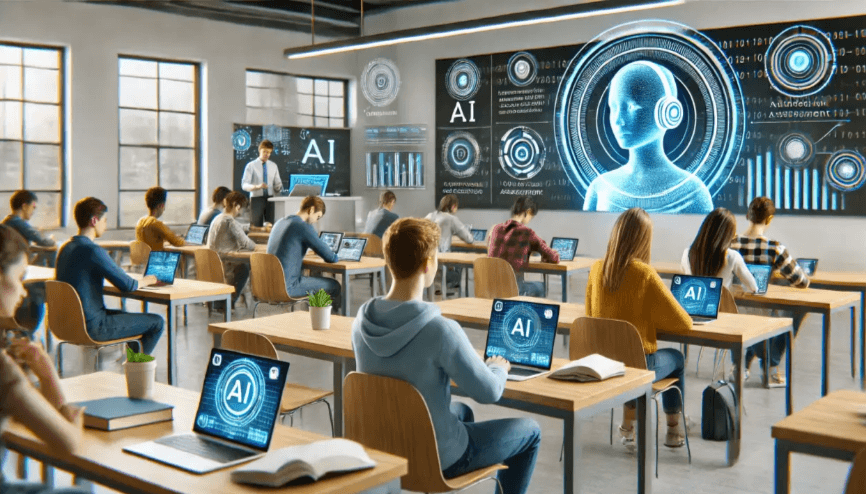
AI is reshaping student learning by personalizing pathways and pacing to match mastery. Real-time feedback and adaptive assessments highlight gaps and guide next steps. AI tutors support cross-subject practice, while dashboards offer data-driven insights for teachers and administrators. The result is scalable, equitable, learner-centered progress with transparent privacy safeguards. Yet questions remain about balancing autonomy, outcomes, and equity as these tools integrate into classrooms. The balance point will shape the next phase of instruction.
How AI Personalizes Learning Pathways for Students
Artificial intelligence personalizes learning pathways by analyzing individual student data—such as pace, accuracy, and topic mastery—to tailor content, pacing, and assessment. The system supports adaptive pacing and targeted interventions, removing rigid schedules. It operates within ethical design frameworks to protect privacy and equity, ensuring transparent algorithms and-considerate data-use. This approach aligns with learner autonomy, enabling self-directed progress while maintaining measurable outcomes.
Real-Time Feedback and Assessment With AI Tools
Data-driven dashboards support educators in targeted interventions, while AI assessment scales across tasks, ensuring consistent benchmarks and traceable growth without sacrificing instructional autonomy or learner agency.
AI as a Tutor: Bridging Gaps Across Subjects
Across disciplines, AI-driven tutoring analyzes individual gaps, adapts explanations, and sequences practice to match each learner’s pace.
AI as a tutor offers targeted guidance across subjects, tailoring content without bias.
It supports self-directed study through adaptive drills, hints, and pacing controls.
Metrics compare performance, revealing progress in ai tutoring and cross subject tutoring, enabling scalable, student-centric learning pathways with measurable outcomes.
See also: How AI Is Transforming Digital Photography
Data-Driven Insights for Teachers and Administrators
Data-driven insights empower teachers and administrators to diagnose trends, measure outcomes, and allocate resources with precision. The approach emphasizes transparency, enabling informed decisions without micromanagement.
Teacher dashboards summarize performance, attendance, and engagement metrics, revealing patterns across classrooms.
Administrators align curricula and staffing to needs, fostering equity.
Data driven insights support proactive interventions, while preserving professional autonomy and classroom freedom to innovate.
Frequently Asked Questions
How Does AI Affect Student Privacy and Data Security?
AI systems introduce data privacy and security risks, requiring robust protections. They collect sensitive information, increasing exposure to breaches and misuse. Mitigation relies on transparent policies, minimal data collection, strong encryption, access controls, and ongoing independent audits.
Can AI Replace Human Teachers Entirely?
Can AI replace human teachers? No. A 2023 survey found 68% prefer hybrid models. AI can augment instruction, but human teachers provide nuanced mentorship, ethical judgment, and adaptive empathy that machines cannot fully replicate.
What Are the Costs of AI Implementation in Schools?
AI procurement and budget impact vary by district, but infrastructure costs and ongoing teacher training dominate initial expenses; total costs hinge on scale, licensing, and support, with measurable efficiency gains balancing long-term investment for schools seeking freedom.
How Inclusive Is AI for Diverse Learning Needs?
Inclusion appears variable; evidence shows inclusive accessibility and adaptive customization assist diverse learners, yet gaps persist across platforms and contexts. Data suggests improvements when standards are aligned with teacher training, but universal efficacy remains contingent on resources, design rigor, and ongoing evaluation.
What Are Potential Biases in Ai-Driven Learning Tools?
The answer: Potential biases in AI-driven learning tools include bias amplification and data leakage risk, where models intensify skewed patterns and expose sensitive information, respectively; careful dataset curation, privacy safeguards, and ongoing auditing are essential for responsible deployment.
Conclusion
AI personalizes pathways, yet classroom human touch remains essential. Real-time feedback accelerates mastery, but trusted assessment safeguards equity. AI tutors bridge gaps across subjects, while teachers retain autonomy with data-driven dashboards guiding decisions. The juxtaposition of rapid automation and deliberate pedagogy highlights a future where scalable insight coexists with learner agency. As metrics rise, the core goal endures: learning that is personalized, transparent, and accessible to every student.
